What My Brain Has Picked Up From Watching Cheetahs Up Close with Bertie Gregory

The Soil Remembers
18th January 2026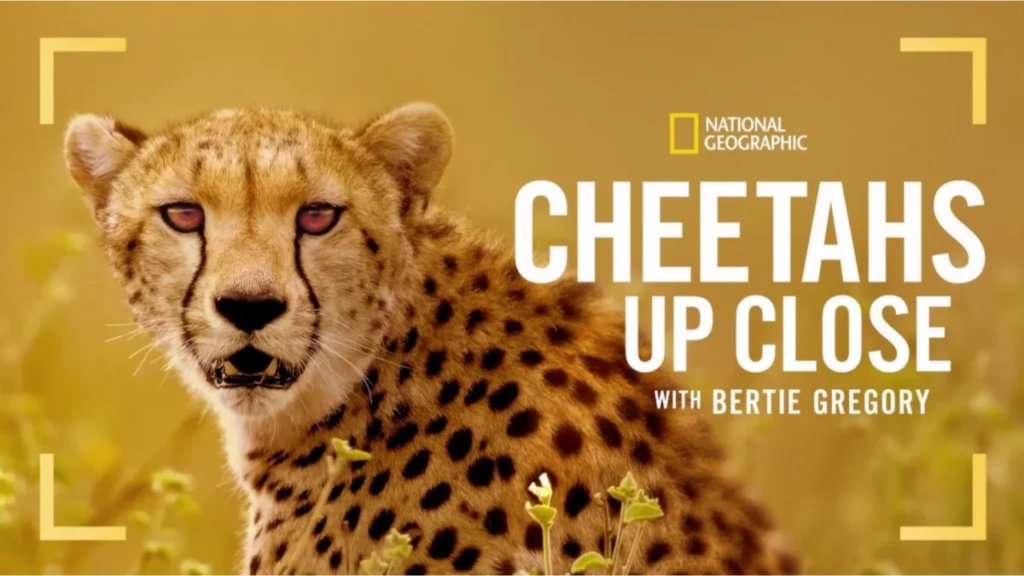
And no, this is not a review of the film. Rather, a review of the current state of filmmaking in the global south. For filmmakers on the continent who, more than ever, are getting the opportunities we deserve, albeit we are getting close to where we want to be.
This has been in my head for a while. Watched this film, Cheetahs Up Close with Bertie Gregory, the second week of January, and it felt as if it set the tone for the year, so writing about it was going to take some time. Other than that, here is why you should watch this film, especially if you are a filmmaker or a storyteller. The rest of the educational folks, you can sit this one out. Unless natural history filmmaking is still your interest.
Why This Film Matters
First of all, I was curious. The trailer was incredible, and I knew immediately this was going to be interesting and worth every minute. But this article has been in my head for various reasons. One: access. Not just equipment, but getting these opportunities, especially in the global south countries. You see, one thing I highly enjoyed in this film, and honestly, the main reason why I watched it, was the presence of Jigar Ganatra, a Tanzanian filmmaker; actually, let us call him one of the best in filmmaking and whom I have got to see and experience in this day and age, thankfully. I have lately become biased to watching films where we Africans are in, because if we really cannot see ourselves, then who do we become?
So, before I digress.
A quick look at the global natural history filmmaking will remind you how very biased it still is. Consider this: thePridelands Wildlife Film Festival, which became Africa’s first continent-led wildlife film festival in 2022, received submissions from just two African filmmakers in its inaugural year. Fast forward to 2024, and that number jumped to twenty – progress, yes, but still a fraction of what it should be. The irony is stark when you look at festivals like Wildscreen, where roughly a quarter of the films showcase African wildlife, yetthe vast majority are made by non-Africans.
Here is where it gets even more frustrating: Tanzania alone has around 10 million people working in the creative industries; that is about 15% of the entire population, according to BASATA’s 2017 figures. Yet the film and audiovisual sector across the continent? A UNESCO report calls it what it is: underfunded, underdeveloped, and undervalued. We are talking about an industry pulling in $5 billion a year when it has the potential to generate $20 billion. That is leaving $15 billion on the table because the infrastructure, investment, and access just are not there. (Shamelessly stole this paragraph from Wildscreen.)
Yes, the top players are spending sleepless nights, hopefully, to make it easier for storytellers in the global south to be able to share their own perspective. So why does this film matter to filmmakers on the continent? To me, actually, because I speak for myself, not others, is the fact that Jigar was the director for this National Geographic/Disney+ special. He documented what Bertie was doing. If you have watched it, you would know that Bertie is the host for this series of films. So he is being captured in what he is doing throughout the film. Kind of like on-the-fly filmmaking combined with documentary filmmaking. In the filmmaking world, this is a technique called “behind-the-scenes” or “making-of” documentation, but elevated to the art of observational cinema.
The Question of Access
But let me get back to the question: Access. Have you ever googled how much cameras and, in general, equipment for filmmaking costs? I know we have mobile phones and we can document anything anywhere these days, but to keep up with the global market sometimes… You have to be different, if not better. When I thought about writing a review for this film, my thoughts were to praise everything, but my two cents have a cognitive dissonance on it, and so I chose to release the thoughts in my brain to the world.
Back to equipment cost. I remember once when I took the company drone home and was asked how much it cost, plus my training. The figure was enough to elicit the buying of a piece of land. I have not even mentioned to them the equipment I cautiously get the opportunity to document the rivers of Africa with. I think they will think the people who support this endeavour of filmmakers like me are mad.
Consider this: A Sony FX6, one of the industry standards for wildlife filming, costs around $6,000 for the body alone. The RED cameras used in high-end productions range from $7,000 (RED Komodo-X) to $30,000 (RED V-Raptor X 8K) for just the body. And do not get me started on the Canon CN20 50-1000mm lens, described by wildlife cinematographer Paul Stewart as “one of the unsung heroes of wildlife filmmaking” and “a game changer”, which is essential for capturing those intimate close-ups but comes with a price tag that matches a substantial piece of land down payment in many African countries.
So yes, African parents, many African parents of filmmakers and storytellers want to support our creative work, but honestly, cannot. Fact is, in my many and few years in this industry and discussions with my very, very close friends, one, filmmaking is a hobby and only ‘rich or privileged kids’ can afford to do this. Or two, crazy people like many of the filmmakers I know have sacrificed a lot to buy equipment of their own in the hope that the money will come back. Yes, in general, if we stick with the first narrative, our stories will never be documented. We will not do anything because the equipment is inaccessible, and unless you know someone who knows someone, you are just going to do the bare minimum.
Breaking Through Barriers
But then, what if you do not let this access to equipment stop you? What if there are systems to help us document our natural world without being stressed about this equipment? See, I remember exactly the words I said when I finished my first workshop with The Wilderness Project and AFRISOS (Africa School of Storytelling) in the Okavango Delta, and my main concern was access to equipment. See, lucky for me, and a huge privilege I consider to have, is that I can put up a Sony FX6 with my eyes closed. Trust me, I know I can. I have also had the privilege to play around with a RED and CN20 courtesy of NEWF (Nature Environement Wildlife Filmmakers). Other than that, I have been in spaces where I have access to equipment. So when you think of access, think of the organisations I have mentioned because they are some of the few that exist.
But what does this have to do with the film Cheetahs Up Close? It is the type of equipment we need to document our natural world in today’s age, so that this footage will last for generations. See, when I think about my work in storytelling, I rarely think about the film when it comes out; it is how long it can be preserved to be watched by people five generations from now. In this, I bring into play one of the books I recently read: Sir David Attenborough’s Adventures of a Young Naturalist: The Zoo Quest Expeditions. This book was a journey through the lengths Sir David took to document the places they went. The mishaps they had with equipment and the lengths he went to protect the footage he had taken. Most of it was the early days of filmmaking, and if you look at what equipment was there then, to what we have now, we are way, way, way more advanced, and this footage will last for centuries (if aliens do not wipe out our data).
And before I move on, should I talk about the cost of getting permits to film in national parks, or is it a story for another day?
The Path Forward
So here I am after this full rant, to tell you to watch Cheetahs Up Close with Bertie Gregory. Not because you will learn so much about cheetahs or cameras, but you will see what happens when you let us be part of the story. Because we are not here to reinvent the wheel and start afresh as African filmmakers, but we are here to learn, teach, unlearn, and be brave enough to show you our world through our eyes.
The future of African wildlife filmmaking is not about mimicking Western formats; it is about grounding our work in traditional knowledge and perspectives, spending time with communities, learning from them, and connecting with their histories. It is about changing from being observational to being participatory. It is about us telling our stories, from our perspective, with our equipment, on our terms. It is remembering that no matter where we come from, we too have a voice.
Because when Sir David Attenborough documented the world in the 1950s with Zoo Quest, he was laying the foundation for generations to see nature through his eyes. Now it is time for the world to see Africa through our eyes.