Sailing on Plastic from Lamu to Cape Town #PlasticRevolution

Town Birds…A Continuation
14th June 2017
10 Kenyan Songs that Speak on Environmental Awareness
19th June 2017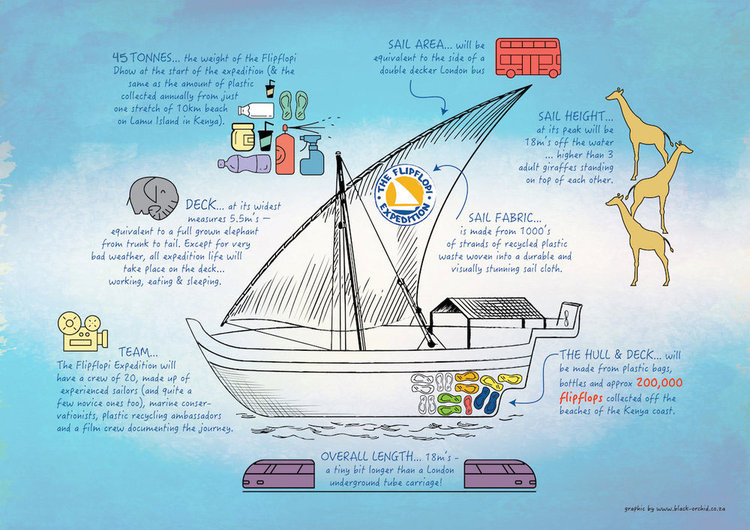
Our oceans are full of wonder, beauty, and brilliance. Beauty beyond what we see above; the green and blue hues of our oceans. Within it, there is life. A life that depends on these oceans for survival.
However, over one million seabirds and 100,000 marine animals die each year due to plastic waste pollution. Our oceans are clustered with plastics forming gigantic layers of floating plastic debris. Plastic waste has become an unrelenting cause for suffocation leading to death for most sea animals. Most plastics end ups in the marine food chain to humans.
How does plastic find itself in our food chain?
Picture a small fish that consumes pieces of plastic. A much larger fish such as the Tuna fish preys on the small fish. Man consumes the tuna fish. In the end, we end up consuming the plastics we disposed of. The boomerang effect. What we dispose of casually (plastics) gets back to us in smaller toxic forms called microplastics.
Microplastics are defined as particles less than 5mm across. These particles end up in the diet of marine mammals and birds, including corals and zooplankton. Persistent toxic chemicals such as bisphenol A (BPAs) and pesticides stick to and accumulate on plastic particles. That’s another added extra layer of contamination.

Accumulation of microplastics in a beach hopper after 72 hours’ exposure. Louise Tossetto et al, Author provided: Image Source
When microplastics, with an added layer of BPAs and pesticides, gets in the food chain, they definately don’t immediately cause death but affect animal behavior and our hormones. This results in an increase of lifestyle diseases such as cancer in humans.
Plastics are very convenient, versatile and valuable. They do not break like glass neither do they leak. They can be made into anything. However, we use plastics in our day-to-day lives and in most cases, the plastic does not even last one hour before it’s disposed of. Consider straws, plastic caps, plastic cutlery, plastic bottles and plastic bags. These are single-use items. Items that end up in the garbage dump even before the day ends. Some of these plastics end up in drainages, clogging up our towns and accumulating in our streets, roadsides, water bodies, and beautiful beaches. Plastics are not biodegradable and the plastics we use today will last for years.
Related: Open Your Eyes Narrated by Jeff Bridges
Imagine a boat. Not your normal boat made from wood. A boat made from plastics. Not a small boat. A big boat. A boat that will sail from the Kenyan coast to Cape Town in South Africa. This may seem impossible. However, Ben Morison and his team at Theflipflopi.com believe it is very possible. Captain Ali Skanda is the ‘constructor’ of this plastic boat.
You can join this environmental campaign through the #PlasticRevolution that was launched during this year’s World Oceans Day by the Flipflopi project team. The main aim is to educate people and spread awareness on the use of single-use plastic and its effects on marine and land mammals including us.
Join the movement;
Remember to reuse, reduce and recycle our use of plastics and support the Plastic Bag Ban.
Unless someone like you cares a whole awful lot, nothing is going to get better. It’s not. – Dr Seuss